You land in another country. You grab your bag off the carousel. You head to customs. Then a security dog stops at your bag. Officers pull you aside. Inside is contraband you have never seen. This isn't a mix-up. It's a real scam called luggage tag switching.
In 2026, Canadian authorities confirmed at least 17 travelers were detained abroad after their bag tags were swapped for tags from bags packed with drugs. Six baggage and ramp workers at Toronto Pearson International Airport were arrested in connection with the scheme. Flights involved went to the Dominican Republic, Paris, Germany, Morocco, Bermuda, the Philippines, and Korea, some of which carry the death penalty for drug offenses.
How the scam works
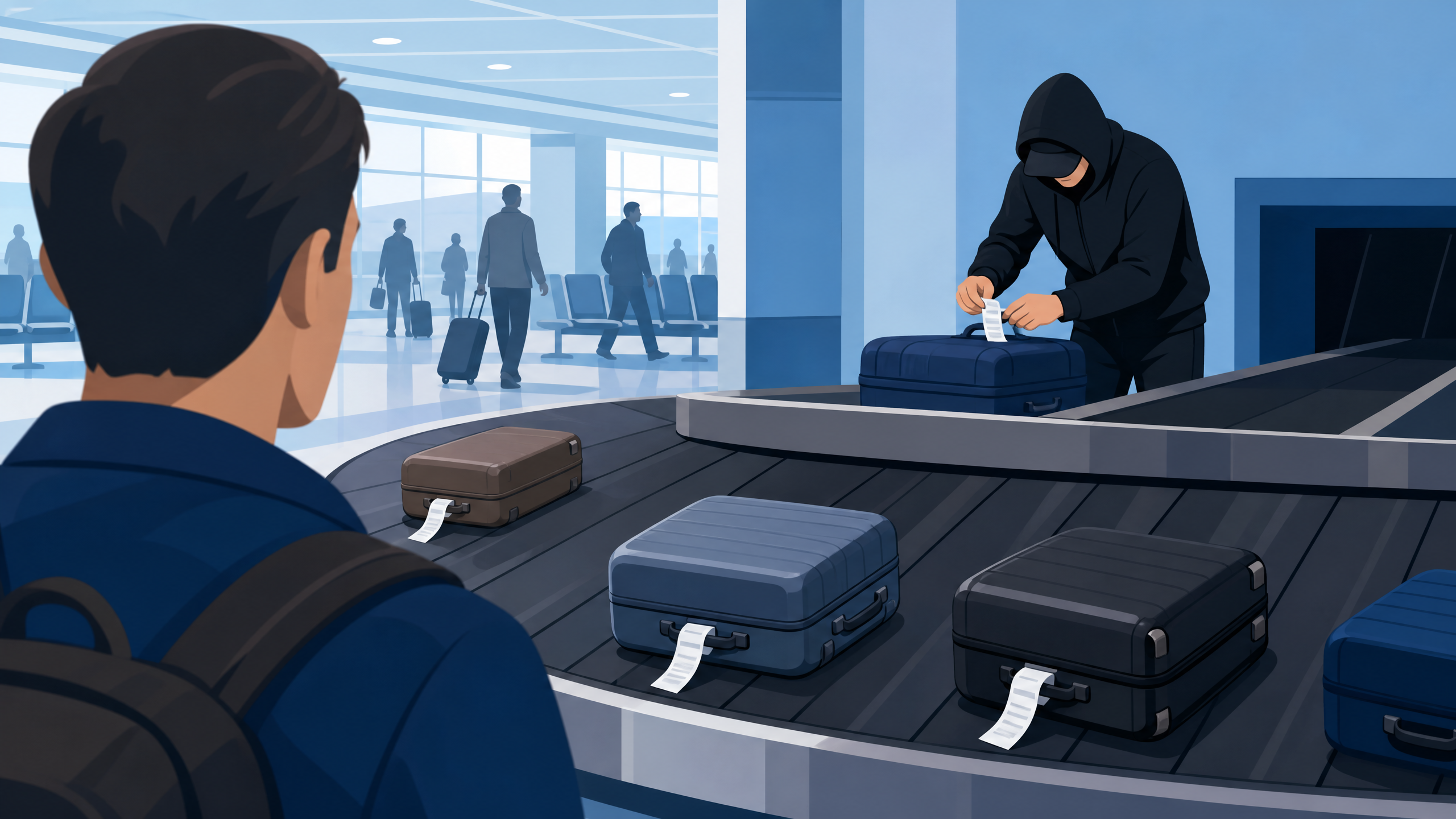
It relies on an airport insider, often a baggage handler or ramp worker. Criminals check in a bag full of contraband under a fake name. Once the bag reaches the secure sorting area, the insider peels the routing tag off it. Then they find a bag headed to the same destination and switch the tags. Now your name and flight number are on the bag full of drugs. Not your bag.
When you land, you grab the bag with your name on it, because that's what the tag says to do. You walk through customs. If the bag gets flagged, you're the one detained, not the smugglers. If it clears, someone linked to the ring meets you outside, claims there was a mix-up, apologizes, and takes it back.
In 2026, a Canadian paramedic named Nicole was flying from Toronto to New Zealand with her family. During a layover in Vancouver, she was pulled off her flight and detained for hours. She'd noticed her bag's tag looked different from the one she checked in with: damaged, and wrong. She was eventually released.
Why it works
Most travelers use plain black or dark suitcases. After a long flight, you're tired. You look for a black bag, check the name tag, and walk out. You trust the tag because it has your name on it. That trust is the entire scam.
How to protect your bags
You can't control what happens in the secure sorting area. You can make your bag a bad target.
- Make your bag stand out. Use bright, unusual luggage, or wrap a plain bag in colorful straps or tape. A one-of-a-kind bag is hard to find a match for.
- Photograph everything at check-in. Take a clear photo of your bag and a close-up of the printed routing tag. That's proof of what you handed over.
- Verify before customs, not just the name tag. Check the locks, the zippers, the bag itself. Tag says it's yours but the bag doesn't look right? Don't touch it. Alert airport security immediately.
- Drop a tracker inside. An Apple AirTag or similar buried in your bag proves where it actually went if the tag gets swapped.
If you're detained abroad over a swapped tag, ask to contact your embassy right away. Don't sign anything or admit the bag is yours. Ask officials to pull the security camera footage from your departure airport, and show them the photos you took at check-in.
Was your info in a breach tied to your email?
Our free scan shows which known breaches contain your email and whether identity data was exposed alongside it.
Run the Free Breach Scan →